How I Keep Two Dogs From Fighting Over Food and Toys
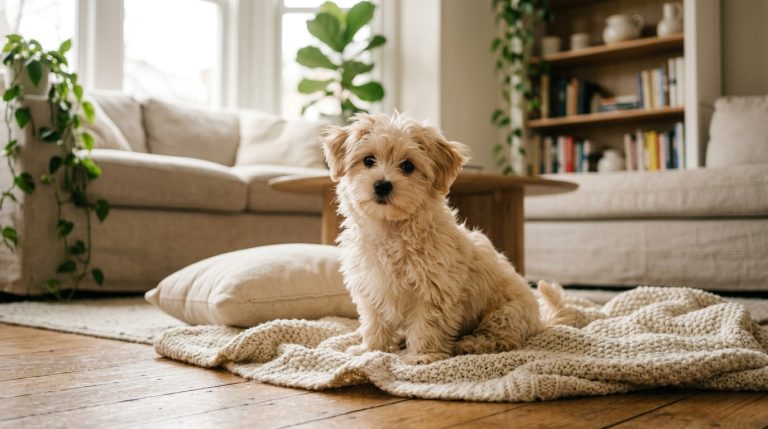
Last Tuesday Georgie ate my sock and acted like I’d wronged him when I took it back. He gave me this look, like I was the villain, and then went to complain to Teddy about my injustice. This is my life with a Morkie who thinks he’s a wolf trapped in a 7-pound body, and his much more chill, slightly clueless brother, Teddy. You asked how I keep them from tearing each other apart over every last crumb and squeaky toy. Honestly, it’s a daily negotiation, and sometimes I feel like I’m running a tiny, furry UN summit.
The Food Scramble: Operation Separate Bowls
So, the food situation. When Georgie first came home, a tiny fluffball of pure chaos, he had no concept of personal space, especially around food. Teddy, who’s a bit of a gentle giant (for a Morkie, he’s like 10 pounds), would just let Georgie push him out of the way. Georgie eats like he hasn’t seen food in a week, even after I just put it down. He’s a Hoover. Teddy, bless his heart, is a grazer. This was a recipe for disaster, with Georgie finishing his food in 30 seconds flat and then trying to strong-arm Teddy out of his.
My first brilliant idea was just to feed them at opposite ends of the kitchen. Rookie mistake. Georgie, once he’d cleared his own bowl, would sprint across the kitchen like Usain Bolt, tail wagging, ready to “help” Teddy. Teddy, ever the gentleman, would usually just step aside and let him. This was not only unfair to Teddy but also made Georgie’s already insufferable ego even bigger. He genuinely believed he was entitled to all the food.
What actually worked, after much trial and error (and a few exasperated shouts of “Georgie, NO!”), was a combination of physical separation and timed meals. Now, Georgie eats in his crate, and Teddy eats in the kitchen. Yes, his crate. He’s comfortable in there, and honestly, it’s the only way to ensure he focuses on his own meal and doesn’t pull any dominance stunts. The moment the food goes down, he’s in his crate, the door is shut, and he has 10 minutes to finish. He usually does it in 3. Teddy gets his food in his bowl on the kitchen floor, where he can take his sweet time without a tiny tyrant breathing down his neck.
I also use a slow feeder for Georgie. I use the Outward Hound Fun Feeder Slo-Bowl, starting at $12 on Amazon. Before that, he was inhaling his kibble so fast he’d often choke or throw up. This bowl has ridges that make him work a little for each bite, slowing him down considerably. It’s not just about preventing fights; it’s about preventing him from becoming a projectile vomiting machine after every meal. Teddy doesn’t need one, he savors every bite like it’s his last gourmet meal. Georgie, meanwhile, thinks every meal IS his last gourmet meal.
The Toy Wars: Every Squeak is a Battle Cry
Toys are a whole other beast. Georgie is obsessed with toys. He’ll gather them, hoard them, and guard them like they’re made of gold. The moment Teddy even glances at a toy Georgie has decided belongs to him—which is basically all of them—Georgie starts the low growl that sounds ridiculous coming from a dog that weighs less than a chihuahua mix. It’s all posturing and bluster, but Teddy, being the peace-keeper, usually backs off. This is not the lesson I want Georgie learning.
My solution here has been threefold. First, I rotate toys. Not all of them are out at once. Georgie can’t hoard what isn’t available. I keep most of them in a bin in the closet and swap them out every few days. It keeps both dogs interested and reduces the perceived value of any single toy. Second, I have duplicates of his favorite toys. If Georgie has a squeaky toy he’s obsessed with, Teddy has an identical one. I use toys like the KONG Classic Rubber Toy, around $8 at Chewy, which come in multiple sizes, so I can get the same toy in both their preferred sizes. When they each have their own identical toy, there’s less to fight over.
Third, and this is the big one: I enforce a no-toy rule during high-tension times. If I notice they’re both hovering around the same toy or if Georgie’s in one of his moods, toys go away entirely. They get access to them when both dogs are calm and can coexist peacefully in the same room without treating it like the Hunger Games. This has actually taught Georgie that aggressive behavior around toys results in no toys at all, which is a consequence he genuinely dislikes.
The Real Secret: Separate Spaces and Scheduled Calm Time
If I’m being honest, the biggest game-changer has been accepting that these two don’t need to be together all the time. I have a baby gate that separates the kitchen from the living room. When tensions are running high—usually around dinner time or when Georgie’s had too much zoomies energy—one of them hangs out on each side. They can see each other, but there’s a physical barrier. Georgie can’t terrorize Teddy, and Teddy gets a break from being bullied by his tiny, aggressive brother.
I’ve also built in scheduled calm time. Every afternoon, around 3 PM, they both get a Kong (the KONG Classic Rubber Toy mentioned earlier, stuffed with a little peanut butter or wet food) and they settle in their respective spots—Georgie on his bed in the living room, Teddy on his in the kitchen. This gives them something to focus on besides each other and gives me a solid 20-30 minutes of peace. It’s become routine enough that they actually expect it and settle down without much fussing.
The truth is, you can’t force two dogs with different temperaments and energy levels to just get along all the time. What you can do is manage the environment so that conflicts happen less often, and when they do, they’re low stakes. Georgie will probably always think he’s entitled to everything, and Teddy will probably always be too nice for his own good. But with separate feeding stations, rotated toys, duplicates of favorites, physical barriers, and scheduled calm time, I’ve gone from feeling like I’m constantly refereeing a tiny furry war to actually enjoying both of them. Most days, anyway. Last Tuesday, Georgie still owes me a sock.